
How Many Porta Potties Do I Need for OSHA Compliance?
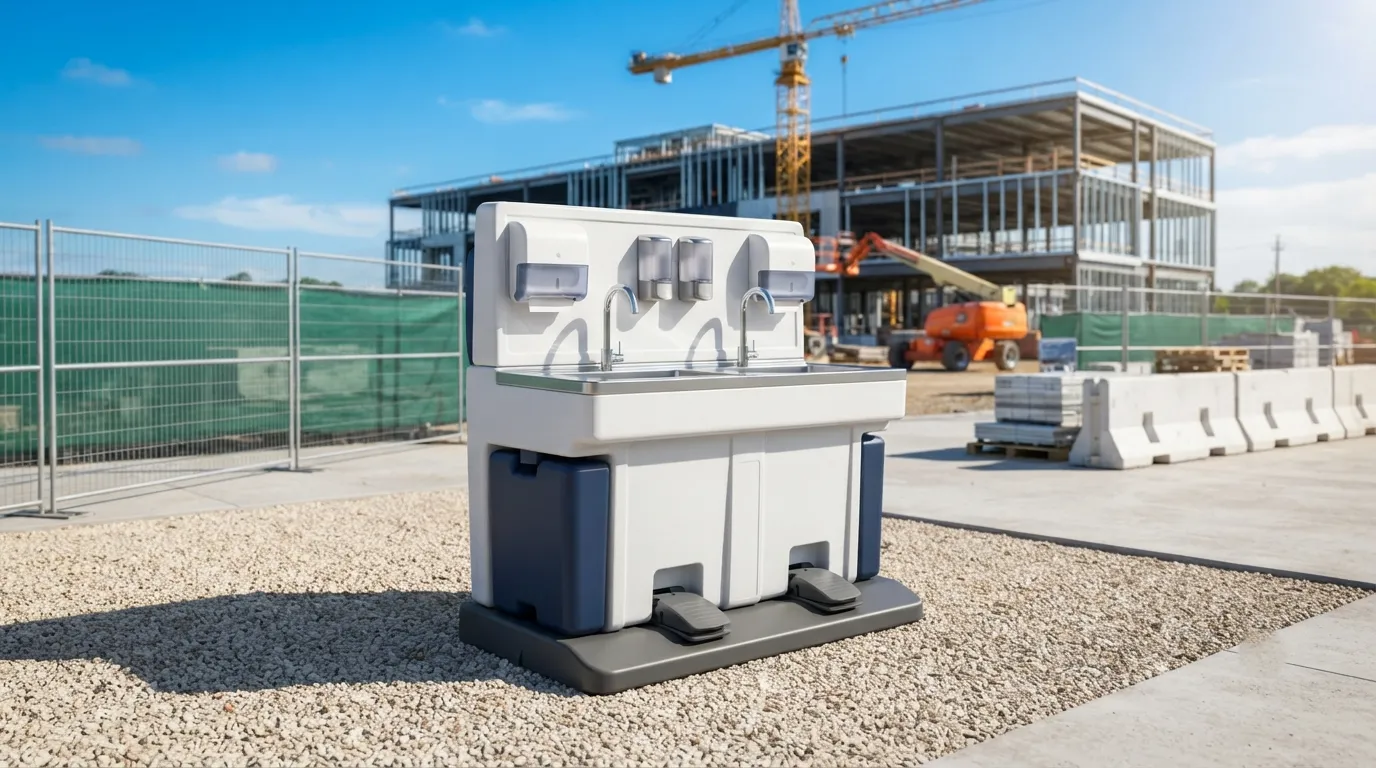
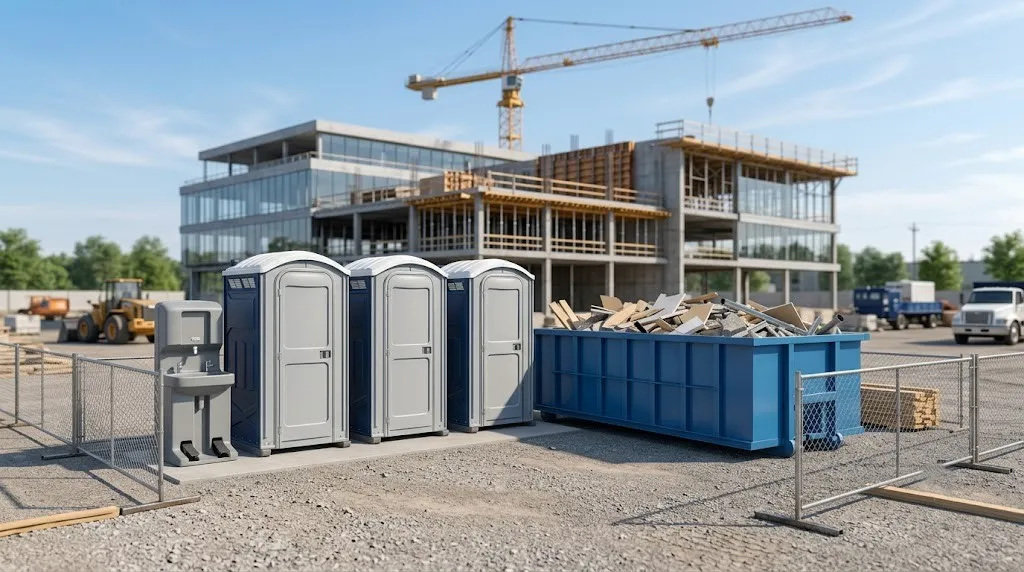
Start with the headcount on site at peak hours, not the total roster. OSHA 1926.51(c) sets the baseline: 1 facility per 20 workers up to 20, then 1 toilet seat and 1 urinal per 40 workers as the crew grows past that, dropping to 1 seat and 1 urinal per 50 workers once you cross 200 people. A 35-person framing crew in Provo needs more than a single unit parked by the trailer. Our how many porta potties do I need guide walks through the math for mixed shifts and multi-trade jobs. Water matters too: 1926.51(a)(1) requires an adequate supply of potable water at every jobsite, which is why a lot of general contractors pair toilets with a handwashing station rental or a portable sink rental rather than treating them as separate line items. If your crew is spread across a large lot, check our porta potty placement guide before you order, since distance between units affects whether you're actually meeting the practical intent of the rule, not just the headcount math.
What Does OSHA Say About Portable Toilet Distance Requirements?
OSHA's own construction standard, 1926.51(c), sets ratios but doesn't publish a fixed foot-distance from work areas. That's a common misread, and it trips up people searching for a hard number that doesn't exist in the federal text. What does exist: general housekeeping duties under 1926.25 that keep access paths to any sanitation unit clear of scrap and debris, and lighting minimums under 1926.56(a) for areas where workers move around after dark. If your project also involves demolition debris or scrap, pair your toilet order with a roll-off dumpster rental so the path to the units stays walkable. For sites where forklifts or heavy equipment operate near the units, 1926.202 requires barricades that meet ANSI D6.1, which is worth flagging to your site supervisor when you're placing a standard porta potty rental near active traffic lanes.
Does Cal OSHA Have Different Portable Toilet Requirements Than Federal OSHA?
Utah operates under federal OSHA, not a state plan like California's, so Cal OSHA's specific field sanitation rules don't apply to jobsites here. Contractors bidding multi-state work sometimes ask about "cal osha portable toilet requirements construction" because their home office runs projects on both coasts, and it's a fair question. For a Provo jobsite, 1926.51(c) is the governing federal standard, full stop. If your crew works in agriculture rather than general construction, note that a different rule applies: 1928.110 sets field sanitation requirements for hand-labor employees, calling for a toilet and handwashing facility within a quarter mile walk, at a ratio of one facility per 20 workers. That's relevant for orchard and farm crews outside the city, and our farm and agricultural restrooms page covers the placement logistics for that specific rule. Event organizers and general contractors, by contrast, should stick with 1926.51(c) as their reference point.
Do OSHA Rules Require ADA-Accessible Portable Toilets on Job Sites?
OSHA's toilet-count rule doesn't itself mandate accessible units, but if your project falls under ADA obligations, separate design standards kick in. ADA Standards 213.2 requires that where portable toilets are clustered, at least 5 percent of the units, and never fewer than one, must be accessible. That accessible unit needs a 60 inch turning circle under 304.3.1, a 32 inch clear door opening per 404.2.3, and a 36 inch clear approach route under 403.5.1. Our ADA accessible porta potty units meet those figures. Public events in Provo, including anything drawing spectators rather than just crew, tend to trigger ADA obligations faster than a private jobsite does, so it's worth reviewing ADA restroom requirements before you finalize a site plan. Washing facilities carry their own rule too: 29 CFR 1910.141(d)(2) requires soap and towels or a hand-drying device at any handwashing station, and hand sanitizer alone doesn't satisfy it. If your crew is applying paints, coatings, herbicides or insecticides, 1926.51(f)(1) requires washing facilities specifically because of those contaminants, which is a narrower rule than general jobsite handwashing.
| Unit | Day | Week | Month |
|---|---|---|---|
| Standard | $100-$350 | $130-$500 | $125-$325 |
| ADA | $200-$400 | not listed | not listed |
| Deluxe | $85-$1,200 | $150-$290 | not listed |
Provo contractors juggling multiple trades often add a temporary fence rental or a storage container rental alongside their toilet order, since equipment security and sanitation tend to get bid together. If you're 5.6 miles away in Orem or 6.7 miles south in Springville, the same OSHA ratios apply; the rule doesn't change at the city line, only your service area delivery logistics do.
How many porta potties does OSHA require per worker?
One toilet facility per 20 workers is the baseline under 1926.51(c). Once a crew passes 20 people, add one toilet seat and one urinal per 40 workers, dropping to one seat and one urinal per 50 workers at 200 or more.
Is hand sanitizer enough to meet OSHA handwashing rules?
No. 29 CFR 1910.141(d)(2) specifically requires soap and towels or a hand-drying device. Hand sanitizer alone doesn't satisfy that standard, so a hand sanitizer station rental should supplement, not replace, a proper handwashing station.
Does OSHA require a specific distance from toilets to the work area?
No fixed foot-distance appears in 1926.51(c). Access paths do need to stay clear under 1926.25, and lighting minimums under 1926.56(a) apply to unit locations used after dark.
Do event sites need to follow the same OSHA ratios as construction sites?
Public events generally aren't governed by 1926.51(c), which targets construction employers. Event organizers should still plan generously; check our event restroom rental guide for headcount-based planning that isn't tied to a jobsite ratio.
What happens if a Provo jobsite doesn't meet OSHA toilet ratios?
Inspectors can cite under 1926.51(c) for insufficient facilities. Beyond the compliance risk, undersized counts also mean longer lines and slower turnover, which is why most contractors order slightly above the minimum ratio rather than exactly at it.
Next step
Get a delivery date
Tell us the address, the dates and the headcount. We size the order and confirm the route.